
I am no artist. Not in any 'conventional' way, at least. But having spent years as a climate justice activist, as we have worked to imagine a different future, I have learned that we are all in the same business of art. That is, the art of imagining possibilities.
Our world is one in crisis. No wonder the vast majority of young people are frightened of the future (Medical News Today). I am too. It is what got me into the climate justice movement six years ago.
Over the years, as we were running after permits and papers, writing petitions and speeches, I started to realise just how estranged I felt with art itself. Contrasting the creative freedom I experienced in protest, I came to see the Arts as a restraining realm. Being driven by nothing but the faith in possibilities, how could I feel so at odds with what the Arts were supposedly all about? Witnessing the people I cared about, hearts on their sleeves, their voice a brush, the world their canvas, I realised the struggle was not just mine.
Somehow, it seems, political and artistic expression, two acts of radical imagination, spaces of abundant possibilities, have been divorced and marginalized to make room for Politics and Arts.
This is the paradox we find ourselves in. For example, in a supermarket, as you are standing in the cereal aisle, overwhelmed by the many options and glaring colours, choice may feel abundant. Yet, hiding behind the wandering but tired, empty eyes, is a silent acceptance that this is the way it is today, it was yesterday, and it will be tomorrow.
Within the context of this localised stability, acquiescence is the order of the day, deviation is undesirable. This comes as no surprise; the message is reiterated to us throughout life. Obedience to teachers, and parents; to deviate, to imagine, to resist, is dangerous. As it holds true for you, it holds true for those challenging this self-destructive system.
At this moment in time, we find ourselves in a bizarre position: in times of unprecedented choice, we are experiencing a crisis of imagination and possibilities. The mere act of envisioning an alternative, a future we truly long for, not just resignedly accept, has become out of reach.
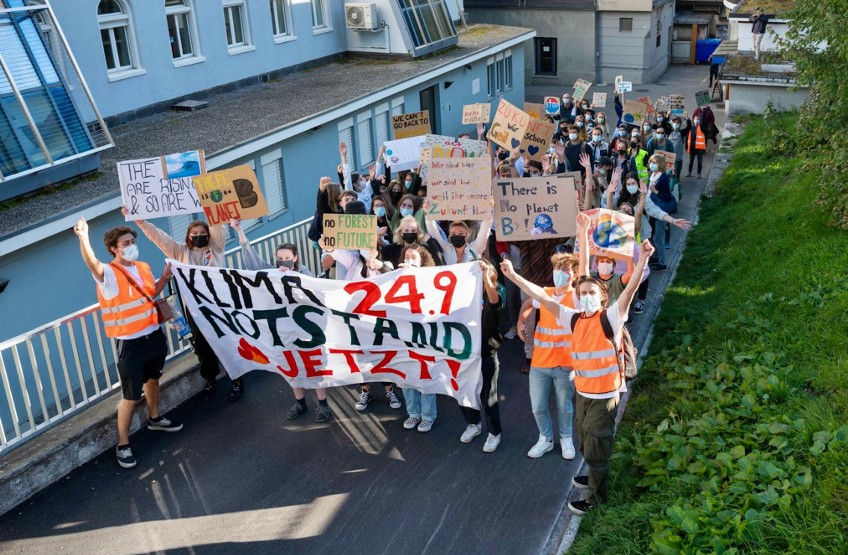
Why? One of many answers is located exactly where I felt my own was suffocating between creativity and politics, art and activism. Yet, the collapse of our collective imagination is not just a symptom of this separation; it is a direct result of it. We have consigned artistic imagination to the realm of the dreamer. We have depoliticised these people and their work, commodified some Art and ridiculed all others. Simultaneously, we have stripped politics of its license to dream; we have unlearned to treat creativity as a tool for success.
Politics and the Arts have severed their once joint roots in radical imagination. By divorcing and then marginalising political and artistic defiance, we have lost the tools to craft narratives of a regenerative world, reproducing instead the destructive world that has gotten us here. As we struggle to grasp the abundance of possibilities, the crises of our time continue to grow bigger and bigger.
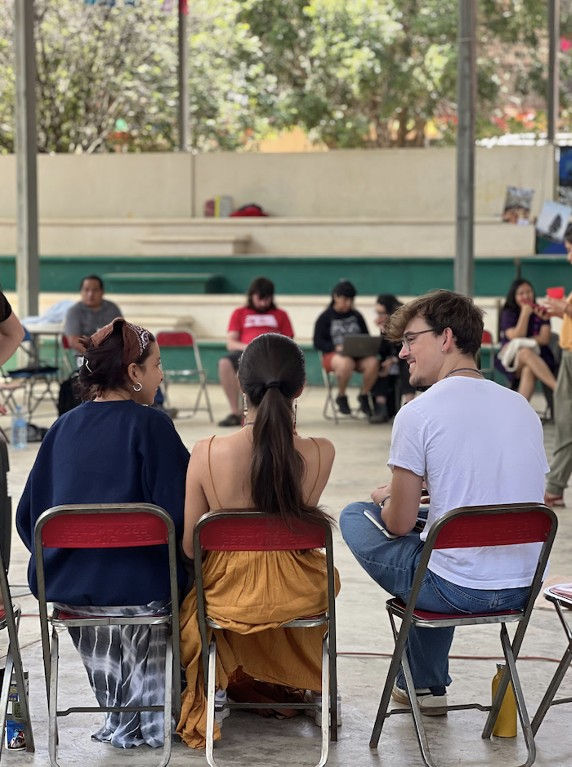
If we want to break out of this vicious cycle, we must overcome this crisis of imagination and dare to dream. Activists and artists alike ought to reclaim their collective identity, fuelling an uproar of possibilities and a revolution of alternatives. Living in a world that is so efficient at destroying itself, collectively, as activists and artists, we are creating and shaping spaces to differ. Where we hope and heal, resist and regenerate; where we embrace our joint roots, we are bringing into existence what was previously unimaginable. In a crumbling world, let us not freeze in despair of what we are losing, but act out of faith in the possibilities we can build from the rubble
All photos courtesy of Niklas Todt.
 Live WhatsApp Chat