
As my friend and I stared out at Niagara Falls, we were met with a confusing sense of disappointment. These incredible waterfalls, a source of poetry and art for centuries and a sacred place of meaning and power for so many, had fallen flat against their surroundings. Turning away from the water, we were immediately confronted by the garish strip of Clifton Hill, a street crowded with everything from hotels to fast-food chains, rollercoasters to mini-golf, arcades to haunted houses. In the face of all this entertainment the Falls themselves ceased to be the main attraction, reduced to a backdrop.
The presence of all these attractions seemed to say to us that this historical, beautiful natural wonder simply wasn't enough, that there was more we should be doing. In the presence of constant entertainment, this ancient, wild thing felt domesticated and subdued, subsumed into the list of attractions that the Falls experience offered.
This kind of domestication of nature has long been a theme within art. Though plenty of artists have attempted to represent the wild - the ferocity of the sea or the stoicism of a mountain range - plenty more have glorified an industrialised, tamed landscape. Dutch painters such as Jan Van Goyen depicted the impact of draining natural water from the land, windmills rising victorious; Philippe Jaques de Loutherbourg sees the sublime within the billowing flames of industrialisation. More recently, art installations like 'Tree Mountain, a Living Time Capsule' by Agnes Denes, a manmade mountain planted with eleven thousand trees, set out to restore the environment but arguably became a visual emblem of human intervention itself, shaped by the very forces (deforestation and drought) that necessitated its creation.
So how can we represent nature in art without taming or domesticating it, subsuming it to our own aesthetic needs? And what can that do to impact our awareness of sustainability and environmentalism? Critical perspectives on these issues have long shifted; Clement Greenberg argued against any kind of mimesis of nature, Ruskin put forward that humans have 'desacrillised' the natural world, viewing it as a source of raw materials to be exploited, emptying it of its mystery, and Hegel even went so far as to say that art cannot stand in competition with nature at all. However, what happens when art does not seek to stand in competition with the natural world, but rather attempts to create new ways of appreciation, new ways of seeing? Seeking to rethink how we engage aesthetically with art that depicts nature, Gallery Les Bois and its artists are optimally positioned to consider these questions.
As an artist represented by Gallery Les Bois, Miranda Carter's prerogative is clear; 'I aim to recreate the feeling you experience when encountering something bigger than yourself. ' Her landscapes are often presented in a dualistic manner, with two paintings suggesting the same location through colour and layout, yet seen from two completely different perspectives. Carter is an artist deeply involved with a sustainable creative process, combining wild swimming and painting to create work that allows the natural world to exist on its own terms. With her Turner-esque sweeping, imaginative landscapes, Carter turns away from explicit, prescriptive detail and instead captures a softly suggestive impression. Carter's depictions of the natural world are respectful and empathetic, and it is telling that her aim, rather than to recreate any specific moment or landscape, is to instead create the 'feeling' that accompanies that landscape. Although Carter clearly pays meticulous attention to brushstroke patterns and colour placement, the overall effect of her paintings comes closer to the classical sublime, the evocation of awe and wonder. It is precisely this sense of the transcendent that Carter uses to point to the importance of the environment's protection.

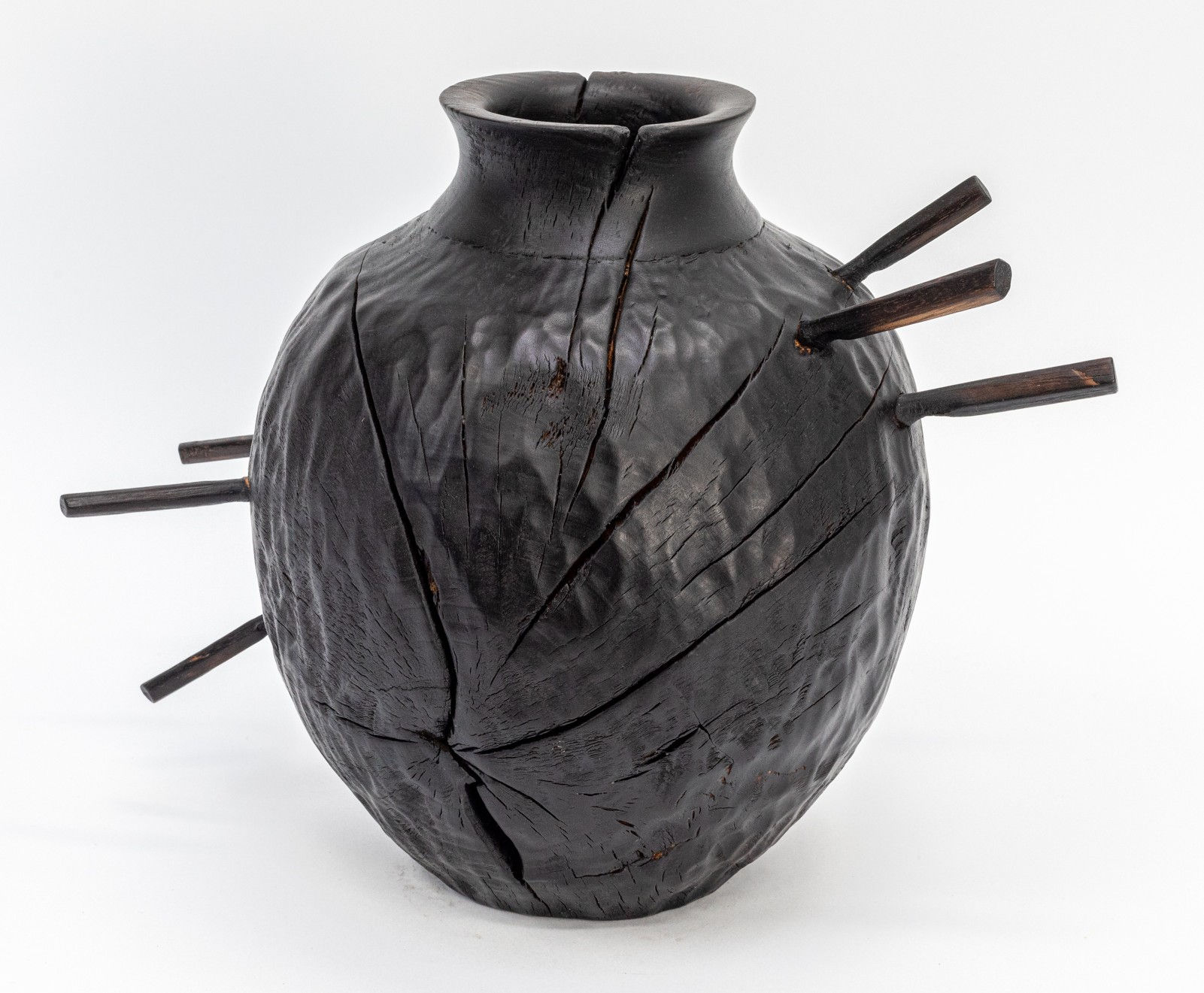
Another artist represented by Gallery Les Bois, Julian Emsley, takes a different approach. Emsley's sculptures, almost functional in their resemblance to traditional vases and jugs, are made with wood that has been naturally felled by wind or because of disease. By participating in the sustainable art practice that working with this wood creates, Emsley balances the binary of wild and tamed nature beautifully. Using the natural circumstances in which this wood is found, Emsley is able to understand wildness and the environment in a completely different way to Carter, yet come to the same kind of conclusions - that the most effective way of depicting nature and avoiding commodification or domestication is to actively participate within living systems.
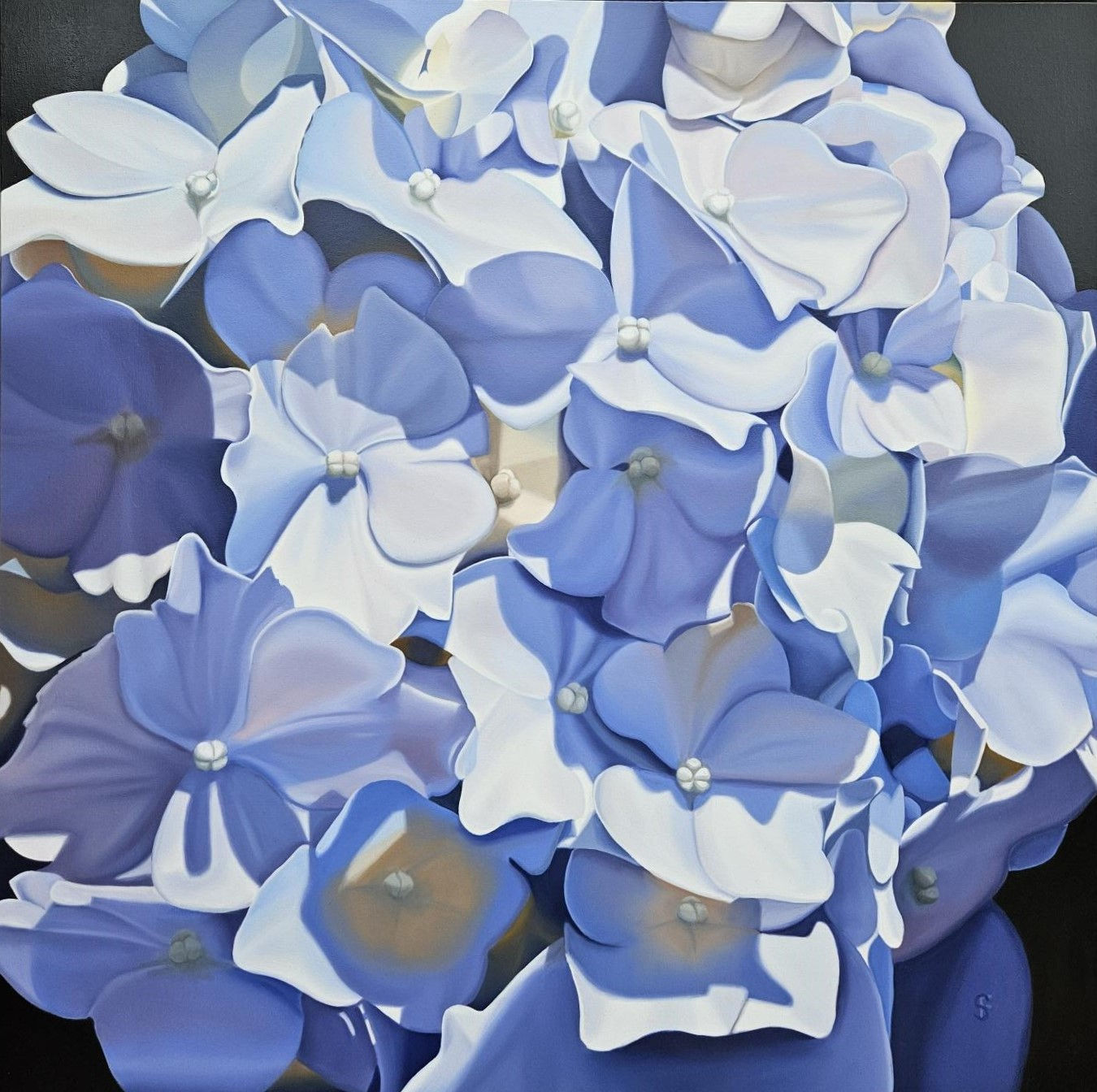
There is also something to be said for a kind of middle ground in between the two aforementioned artists. Steve Foster, a Wiltshire-based fine artist, creates incredibly detailed, vivid oil paintings that capture the rolling folds of flowers, the intricacy of their petals. His attention to detail is so precise that his paintings, rather than completely occupying the domain of photo-realism, hint at the abstract through his use of shading and colour. Rather than purely documenting the environment, Foster uses his own artistic lens to capture the transience and fragility of the flowers he paints, reflecting on the need to preserve the natural world's balance and inherent order. Striking a balance between Carter's sweeping, imagistic approach and Emsley's practical, hands-on sculptures, Foster's sense of abstraction created through his work's enlarged, microscopic focus allows us to understand new ways of representing our environment.
Humans are and have always been a part of nature. Perhaps this way of seeing ourselves as participatory in ecosystems, not working against or alongside them, is the most important perspective we can use to try and think about how we should represent nature in art. The artists shown above present three different, yet ultimately entangled outlooks regarding how we can create new ways of seeing. Whether our personal conception of the natural world is impressionistic and sensitive, based on the experience of a single moment, applied and physical, or abstract and hinged on the beauty of detail, our task is not to compete with the natural world, but understand how we can relate to it, and in doing so, protect it.


 Live WhatsApp Chat